


Best Social Hobbies for Adults to Meet People
Making friends requires not only desire for connection, but the right conditions. From sports to creative outlets, discover which social hobbies work for you!
The hilarious and oftentimes irritating RuPaul popularized the phrase “If you can’t love yourself, how in the hell are you going to love somebody else?”
While the message is catchy and sells well on a T-shirt, it overlooks the fact that we often learn to love ourselves through others. All the benefits of socialization, increased longevity, improved mental health, and better cognitive performance come because spending time with the people we care about makes us happy. Sometimes the path to connection starts solo — a hobby that gives you emotional grounding first and a social circle second. The relationship between anime and mental health is a good example: it builds a shared vocabulary that brings fans together, often before they’ve even looked for community. We’re fundamentally social animals! Being part of a group makes us feel better about ourselves and more empathetic to those around us.
Yet despite knowing these benefits, figuring out how to make friends as an adult remains one of life’s most common challenges. If you’ve ever thought “I have no friends,” you know how isolating that feeling can be. It’s hard to love yourself or anybody else when you feel completely lacking in social fulfillment.
Well, you’re not wrong there. The problem isn’t a lack of interest in socializing, but finding social hobbies for adults that fit into our busy schedules and still feel natural. Organic social hobbies that let us meet people seem scarce and, quite frankly, scary.
If you can relate to that, then this article is for you. We’re going to dive into all kinds of social hobbies to make friends that you will actually enjoy doing.
Team and sporty social hobbies to make friends
Exercise is tremendous for your physical and mental health. Plenty of people use the gym for that, but weights and treadmills are very solitary pursuits, and we’re hoping to find hobbies that let us meet people. Consider these social hobbies that don’t involve fluorescent lights and everybody wearing AirPods:
Team sports (soccer, volleyball, netball)
Team sports are among the clearest examples of social hobbies that turn strangers into a tight-knit squad, building rapport and camaraderie. If you’re less physically able to run around and exert yourself, there are plenty of gentler group hobbies like bowling and curling out there for you.
To get started, check out your local community center, scour online groups in your area for beginner-friendly leagues, or ask one of your active friends! Whichever size ball and court are in play, sports are one of the best social hobbies for men.
Running/ walking clubs
Running is more physically engaging, but just walking for 20 minutes 5 days a week has been shown to boost your immune system and help you sleep. Either way, both are great hobbies for meeting people, as they’re full of natural conversation starters. “How long have you been doing this?” and “What are you running from?” are just some of the very normal ways you can begin a chat.
These groups typically meet a few times a week. Check out hobby apps like Strava or community boards to find running and walking groups nearby for some low-pressure talks that help get the blood pumping. If you’re figuring out how to make friends in a new city, walking and running clubs are ideal since they’re welcoming to newcomers and don’t require long-term commitments.
Dance/ general fitness
For regularly scheduled group sessions that are fun, rhythmic, and involve plenty of interactions, you can’t go wrong with dance. They’re all excellent forms of exercise and sociability, and though dance is available to all, consider your physical ability before committing to a break-dancing class.
Side note: While yoga is one of the more popular social hobbies for women, it’s a very introspective discipline that leaves little room for chatting. Avoid when trying to meet people, engage when trying to become more zen. Dance studios and gyms organize a wide range of group classes, so check them out to see what’s on offer.
Martial Arts Classes
Martial arts classes are inherently social since you’ll see the same people a few times a week, progress through the ranks together, and partner up to practice and spar. Judo, Brazilian jiu-jitsu and boxing classes typically have partnered drill sessions so you’ll have plenty of time to talk in between. Many martial arts schools offer a free introductory class so you can try a style and a school before committing financially.
Outdoor social hobbies
If indoor conversation feels forced, bring it outdoors. The outdoors is brimming with opportunities for conversation, and many outdoor activities let you chat while taking breaks between exercises.
Hiking Clubs
Hiking clubs cater to a wide variety of fitness levels, from casual nature walks to actual mountain climbing. You don’t have to be an experienced hiker to join a hiking club, and hiking trails are perfect places to meet new people. You’ll be spending hours together with very little to do, and a shared unpleasant physical experience bonds faster than a coffee date. Look for beginner-friendly hiking clubs on Nerd Culture or post a flyer on the bulletin board at your local outdoor gear shop. Your local parks department may also organize group hikes.
Cycling Clubs
There are a plethora of cycling clubs. Some focus on casual weekend rides, while others train to compete. Chances are there’s a group suited to your fitness level. Joining is straightforward once you’ve found one. Veteran cyclists love to lend a hand and often share route recommendations and tips on the gear they use. Visit your local bike shop to see if they know of a cycling club since many of them organize their own weekly rides.
Camping Groups
Nothing brings people together quite like a weekend of pitching tents, preparing meals on a campfire and swapping tales. Camping clubs vary from simple car camping weekends to rugged back-to-basics adventures. Choose a club appropriate for your skills; don’t try to tackle an advanced trip. Look for local outdoor gear store websites and Facebook pages to find out if they’re organizing any camping trips that need assistance.
Dog Parks and Dog-Walking Meetups
Having a dog gives you a ready-made subject of conversation and a reason to be outside. Many dog parks have the same visitors returning each day. Dog-walking groups are available in many cities, allowing you to sign up for a specific time and location for your dog to play with other dogs. See if your city has a list of dog parks on its website. Look for local dog-walking groups online. A few of these groups accept volunteers even if you don’t own a dog.
Geocaching Groups
Geocaching adds a purpose to what would otherwise be a walk through the park. Geocaching groups turn a solitary GPS treasure hunt into a group activity. Geocaching events cater to all ages and skill levels because it’s less about physical prowess and more about problem-solving. Both Geocaching.com and local Facebook pages list geocaching clubs and events. Most regions also host a monthly “beginner geocache” event that doesn’t require much effort or prior experience.
Crafty and creative social hobbies
Sports aren’t for everyone, and thankfully, there are just as many adult hobbies based around group creativity that give you a chance to explore your mind and get to know those around you.
Art classes (painting, pottery)
Art workshops are very chill environments, perfect for low-energy but rich and exploratory conversations. They aren’t usually as frequent or regular as other activities, which could be viewed as a positive because supplies can get quite pricey, but you’ll still find they’re fertile ground for social connections. They’re a fitting social hobby for adults who want to meet new people without the pressure of competition. Look at local art cafes or supply stores for notices, or check their social media pages to see if anyone is posting about classes.
Cooking classes
Cooking classes force everyone to stand shoulder-to-shoulder at the same counter while making the same dish. It’s a fast way to break the ice, faster than most of the other creative hobbies on this list. And they’re easy to make repeatable. A class series focused on a particular cuisine or technique can keep the same group of fellow students together for several weeks, which beats doing a one-and-done. Community colleges, cooking supply stores, and some restaurants offer beginner classes. If your goal is primarily to meet new people, look for a recurring class rather than a one-time event. The repeated contact is where friendships can start to form.
Book clubs
If you don’t mind homework, book clubs give you a chance to engage in some intellectual discussion with like-minded peers. Book clubs usually meet around once a month to give everyone a chance to read the text, but you might find some that meet more frequently and discuss smaller excerpts. If you know any big readers and are looking for hobbies to do with friends, this could be right up your alley.
Libraries and bookstores are good places to start looking for book clubs, but you might also find some that advertise online on social media.
Creative classes (photography, writing)
Structured, formal learning is still a great way to meet new people while pursuing a goal. Many community colleges offer courses in photography, creative writing, literary analysis, and even niche subjects like video game writing. These classes are particularly effective for making friends in college as they give you a chance to expand your skill set while engaging in group discussions and coursework around a shared passion.

Getting into these classes will vary depending on your location and availability. Some colleges may have set terms and entry requirements, so research your options online or contact a college representative to get an idea of what they offer.
Your Hub for Social Hobbies to Make Friends
Social gaming hobbies
You may fancy something a little brainier. Games are a pretty broad concept, but whatever form they’re in, competitive or co-operative, they will have you away from your screens and laughing it up with soon-to-be friends.
Board game nights
As group hobbies go, board games are great for those who struggle with small talk. They’re low-stakes and low-pressure, and odds are at least a few people there won’t know the rules, so mechanics guide early conversations and soon you’re all flowing together as you set your master strategies in motion.
Look for local board-game or event-focused cafes, and ask around gaming stores to find a group to start with.
Trivia nights
Trivia nights are one of the best social hobbies for adults. Nothing brings people together like shared playful antagonism, specifically towards that table at the back that seems to know every president in chronological order, and the year each Madonna single was released…
It’s easy to find venues hosting trivia nights or even trivia leagues; from there, you might have to go boots on the ground. Get there early and ask around, see if anybody needs an extra brain at the table.
RPG groups
Role-playing games can seem a little strange to some people, but ultimately, they’re just about telling stories. RPG communities are diverse and incredibly welcoming; they’ll happily guide you through the entire process from character creation to slaying your first eldritch abomination. While RPGs are typically seen as a social hobby for men, recent years have seen games like D&D explode in popularity among people of all genders and walks of life.
These groups meet regularly to talk about all things strategy and life, fostering fellowship within the game and friendship outside of it. Your best bet is to check social media pages and hobby stores, or online forums and sites like Reddit dedicated to the game. You can play games and find Dungeons and Dragons groups online but finding a local group lets you meet in person for a more immersive, socially satisfying experience.
Chess clubs
Chess clubs are one of the easiest gaming groups to get into when you don’t know anyone. Most host casual, open sessions, where you can show up, grab a chair, and play. Your regularity tends to matter more than your actual skill level. They tend to be quite welcoming to total newbies and tournament veterans alike. The most engaging conversations will happen after games, over analysis. Check out your library, community center, and local game store. See if there’s a local chess federation in your city that holds weekly meetups.
Video game meetups
Video game meetups, such as fighting game locals, retro game nights, or co-op game nights, give you a game to discuss so you don’t have to start with small talk. They’re great if you normally play video games alone at home, but want to turn it into an in-person activity rather than starting fresh. Game stores, esports bars, and university gaming clubs often host them. See Nerd Culture or local Discord servers for weekly schedules.
Social Hobbies Made Better with the Right People
Why start from scratch? Nerd Culture’s Group Search connects you with established communities near you. Find groups with regular meetups, engaged members, and shared interests.

Performance social hobbies
If you have a creative itch that yearns for the spotlight, or play an instrument and are looking for friends to jam with, these social hobbies give you a chance to perform while meeting new people.
Improv groups
Amateur theater in general is a good social hobby for adults, but improv is significantly lower pressure. You’ll be working closely with strangers in a medium that demands teamwork and constant support, fostering deep, trusting bonds. You’ll “yes, and” your way to a BFF in no time.
You don’t need any special equipment or formal training, but you should at least have an interest in the craft. Community theaters and drama schools host improv groups all the time, so keep your eyes peeled for an opening.
Music ensembles
Playing an instrument solo is great for your brain; it keeps you cognitively active, helps you learn new things, and gives you a unique avenue for self-expression. Playing as part of a group is a different story entirely. Every bar of music is spent in close communication with your band, watching for cues, tempo, and inspiration.
Finding a group of people who both play music and have a regularly scheduled time to play can be a challenge, but certain avenues are easier than others. Church choir groups and community orchestras keep to structured meetings.
Dance troupes
These go beyond salsa for light exercise, so you’re probably going to need some background training in dance to keep up. Otherwise, intensive physical activity can create some powerful bonds, so consider signing up if you have the moves and don’t mind flaunting them.
Dance studios and any shared creative spaces will have flyers or posts advertising vacancies or new groups seeking members.
Turn Social Hobbies Into Real Friendships
Making friends doesn’t have to be complicated! Nerd Culture helps you find people who share your interests in social hobbies.
Community service and social hobbies
Get yourself out in the world, meet new people, and make a meaningful difference in society all at once. These community activities for adults are fulfilling and can really help improve the lives of those around you.
Volunteering
There are tons of places that need help regularly, especially around public holidays: Soup kitchens, homeless shelters, food banks, the list goes on. As a bonus, everybody there will be acting out of the goodness of their hearts and more than willing to socialize with fellow good Samaritans.
Look around your neighborhood, town, or city for volunteering opportunities, and check out their social media pages to see when they’re looking for help.
Community gardening
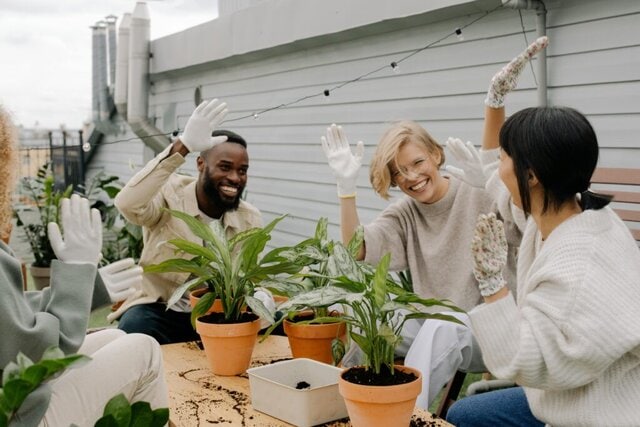
Gardening has some tremendously positive effects on your health. It’s active, but mentally relaxing, and gets you out in the sunshine for a while, which makes community gardens a nice place to lay down some roots. If you’re interested in owning a plot, you might have to wait for availability, but otherwise, they tend to host group projects and meetups frequently. Not many social hobbies give you free vegetables and herbs, so this is one to watch out for.
Community boards, gardening stores, and municipal gardens are good places to start.
Culture clubs
Culture and language centers help local immigrants socialize and learn more about the language and society of the area they’ve moved to. You can offer your local expertise and English skills to help tutor newcomers, and take part in their group outings and activities.
They offer a chance to meet people you wouldn’t usually come across, while also broadening your cultural horizons. They tend to be more prevalent and diverse in major cities, but even in smaller towns, resources and classes are available to particularly prevalent minority groups. Check online to see what your location offers, and if they’re seeking new volunteers.
Language Exchange Meetups
Language exchange meetups aren’t like classes. The meetup matches you with people who want to learn your language as you learn theirs. The meeting itself is your language practice. The meetings are informal, half in one language and half in another, and beginner-friendly because everyone’s in the same boat, trying their first halting words out loud for the first time. Find them through community centers, university international offices, or through an app for language exchange. Is there an in-person meetup group instead of just an app?
Social hobbies for different personalities
Engaging in hobbies to meet people is not a one-size-fits-all affair. If you struggle to talk in front of groups or to focus for prolonged periods, you prefer quieter social hobbies for introverts. Fear not, because here we will explore suitable options for different demographics.
Social hobbies for introverts
Those with limited social batteries should try a structured activity that allows conversations to grow naturally. Learning how to make friends as an introvert often comes down to finding the right environment. Some suitable options are:
- Cooking classes
- Craft groups
- Yoga
- Meditation groups
Social hobbies for neurodivergent people
Neurodivergence is a broad spectrum, but in general, these are structured group hobbies that are low-intensity and cater to a special interest or passion, making it easy to initiate conversation. Consider:
- Walking clubs
- Board games and RPGs
- Arts and crafts
Social hobbies for young adults
You’re never as busy as you are in your 20’s and 30’s, which is why making time for hobbies as an adult often means choosing flexible, low-commitment activities you can duck in and out of:
- Fitness classes
- Volunteering opportunities
- One-off events like trivia nights
Social hobbies for older adults
Group hobbies only become more important with age as social circles shrink. Loneliness can severely impact mental and physical health, so intellectually stimulating and light physical activities that give you a regular way to meet up with friends are the way to go:
- Photography groups
- Tai-chi classes
- Walking clubs
Choosing the right social hobbies to make friends
If you’re reading an article like this, it’s fair to assume there’s something about your life that is making it difficult to meet new people. Maybe you’re even wondering how to make friends when you have none and don’t know where to begin. It could be scheduling and you’re trying to find a social activity that fits your work-life balance. Or it might be psychological, like anxiety or fear of rejection that holds you back from taking the first step.
The good news is that you’re not alone. Plenty of adults struggle to make friends and what’s important is that you’re taking proactive steps by looking for new opportunities. Some important things to keep in mind are consistency and engagement. Making friends is fun, but if you’re engaging in a group hobby you don’t enjoy, motivating yourself to go each time will be difficult. Likewise, if you aren’t entirely sold on improv or a book club, you aren’t going to participate very much. Enthusiasm draws people in, and the right social hobbies will give you the best chance to shine. Turning up regularly is more important than showing up once with confidence. The beauty of social hobbies is they can help you find your passion while building friendships at the same time.
A final note: harness the power of technology. Social platforms like Nerd Culture, local message boards, and social media pages do a lot of the heavy lifting for you when it comes to discovering group hobbies.
Finding new hobbies that lead to friendships takes experimentation. Try two or three at a time and stick to the one that you like best. Don’t try to force friendships; focus on doing your best and let connections evolve naturally through time and exposure.
Your people are waiting—pick an activity and dive in!
FAQs for Finding Your Next Social Hobby
What are social hobby group examples?
Social hobbies are recreational activities centered on a group instead of solo pursuits. Sports leagues, book clubs, board game nights, and volunteering all count as social hobbies because they put you in regular contact with the same people, which is what actually turns strangers into friends over time.
What is the best social hobby to meet people?
There is no single best social hobby for meeting people. It depends on your personality and schedule, but team sports, board game nights, and volunteering are consistently among the easiest entry points since they come with built-in structure and repeat exposure to the same group of people.
How should social hobbies be structured?
Look for activities that meet on a recurring schedule rather than one-off events. Hiking clubs, book clubs, and trivia nights are good examples, since seeing the same faces regularly is what actually builds familiarity into friendship.
What are good active or physical social hobbies?
If you want to move while you socialize, try team sports, running or walking clubs, martial arts classes, hiking clubs, or cycling clubs. These activities are built around shared physical effort, which tends to build trust faster than sitting and chatting.
What are some low-key or creative social hobbies?
If you want something calmer and lower-energy, try art classes, cooking classes, book clubs, or creative workshops like photography or writing. These activities give you space for real conversation without the pressure of competition or performance.
What are good indoor social hobbies?
Board game nights, trivia nights, RPG groups, chess clubs, and cooking classes happen indoors year-round. Because of this, weather never gets in the way of meeting up regularly.
What are good outdoor social hobbies?
Hiking clubs, cycling clubs, camping groups, dog park meetups, and geocaching groups get you outside. The shared scenery gives you something to talk about before you’ve even said hello.