



How to Start a Conversation: Tips for Better Communication
A practical guide to overcoming conversation anxiety with principles, strategies, and starter questions for various social situations.

Conversation is a fundamental part of how we connect with others. It’s one of the first steps in learning how to make friends, build relationships and operate in our workplaces. How we converse can tell a lot about ourselves while also allowing us to gauge interesting things about others. Conversation is a powerful tool that can drive success in many directions. Yet more people than ever are finding it difficult to talk to others, as demonstrated by thinning trends in social interactions.
Starting conversations can still be as beneficial as ever to expanding your social and professional horizons. However, despite having more communication tools and topics to choose from than ever, getting an engaging conversation going has become more challenging. Many people who want to use conversation to improve their skills and achieve more may need guidance on breaking the ice in today’s conversational labyrinth. Let’s explore how you can speak to just about anyone and start a conversation that will improve your social skills.
Why starting conversations feels hard
Studies show that each generation is finding it more challenging to communicate with others, which supports the idea that starting conversations may feel harder for an increasingly larger demographic. But what are the reasons behind the decline in communication skills?
One of the leading arguments is that advances in online technology have increased social isolation, taking a toll on a person’s ability to start a conversation. Widespread social media use and new platform tools have also changed how many people converse, creating online communication frameworks that differ from traditional human conversation.
Ultimately, social isolation resulting from online technology has led to fewer interactions, reducing opportunities to gain conversational experience. It explains some of the main reasons why a person may have difficulty starting a conversation with a potential friend, partner or colleague.
The main conversational hurdles, as shared by current trends, are:
- Confidence levels: A lack of confidence in communication skills is often one of the most common reasons for difficulties in starting conversations. It can frequently affect how you speak and how you present yourself, making it challenging to get the ball rolling.
- Social anxiety: The rise in diagnoses for social anxiety disorder (SAD) in the United States has increased to 15 million per year, where an increasing number continue to fit the symptoms. Those suffering from social anxiety can find it much harder to converse with others.
- Lack of common ground: Not sharing anything in common with a person can be a significant hurdle to starting a conversation, let alone continuing one. While it’s very possible to find common interests by speaking to someone, finding a starter that intrigues the other party can prove challenging.
- Experience: With increasing online use for communication and professional activities, opportunities for social interactions are less frequent. Many people cite the lack of conversational experience as a core reason why they find it hard to start one.
- Finding opening lines: Those looking to start a conversation often put extra pressure on themselves to find openers that are intriguing or creative. Not being able to think of the most suitable conversation starter may cause a person to withdraw entirely from trying.
- Introversion: Introverts often believe they are better at communicating in writing than in real-life conversation. They tend to think more about what they want to say, which can strain their ability to start a conversation.
Conversation principles: how to make small talk work
With the challenges that come with starting conversations, so too come the principles that help overcome them. There are a few factors involved in speaking that can help another party be more receptive to your approach and continue to show interest in what you have to say.
Those looking to learn how to make openings work can begin improving their speaking skills by breaking the initial conversation down into five core supporting pillars.
Positivity
Remaining positive throughout a social interaction can help improve your approach and perception. People tend to initially respond better when a person presents themselves in a positive light, radiating confidence and authority in conversation.
Listening
Listening is a crucial part of conversing with others, as it helps shorten the gaps in conversation. Research shows that shorter gaps between speaking turns in conversations with strangers can make people feel more connected and allow better conversation flow. Keeping your ears open to what others have to say can help you form more interesting, relevant responses more quickly.
Simplicity
As seen in the reasons why conversation-starting is hard, many people tend to overthink how to open the interaction, often having more adverse effects than positive ones. Keeping the conversation simple in the early stages can make it easier to overcome hurdles and build on more intriguing exchanges.
Expression
How you express yourself also affects your conversational skills, particularly through body language. Those who offer warm eye contact, a relaxed posture and a natural smile tend to find more success in starting and continuing a conversation.
Balance
Many life activities encourage finding balance to find more success and develop themselves positively. However, balance is crucial when starting a conversation.
Balance is a healthy mix of asking questions, listening and sharing a bit about yourself. Learning to strike that balance in conversation can help you succeed more in the initial stages.
Your Hub to Initiate Conversation and Meet People
9 steps for starting conversations: how to talk to anyone
Understanding why it’s hard to start a conversation and the principles of becoming a better communicator doesn’t eliminate the challenges of actually initiating that conversation. Because every conversation is different and everyone has a distinct personality, there’s no one-size-fits-all approach to conversing with an individual or group.
However, there are steps you can take to help get the conversation started and build on it as it branches out. Below are nine steps you can use to gain experience, raise confidence and develop your conversational skills.
1. Collect yourself
Understandably, you might feel anxious before starting a conversation. There can be a tense few moments before an approach, where you might be analyzing the different scenarios that can play out.
It’s important to collect your thoughts and compose yourself first before striking up a conversation with someone. If you’re particularly nervous, engaging in some breathing exercises can help quell pre-conversational anxiety.
Getting yourself comfortable before speaking to someone can go a long way toward creating a successful opening interaction.
2. Scout out opportunities for conversation
Finding opportunities to open conversations, especially with strangers or people you don’t know that well, can be the most challenging part of the process. Given the many different types of people and personalities, crafting an opening line that works for all scenarios can be difficult.
There are also varied social scenarios that might change the dynamic of the conversation, providing more opportunities to converse. They can range from social occasions to professional networking events, including everything in between. Of course, not every situation will be the same. There are some scenarios or environments where there’s a greater expectation that someone will start a conversation, meaning people could be more receptive to initiation.
Being present at the right setting can make all the difference. Parties, workplaces, and events are good places where people generally expect to have a conversation with someone they don’t know beforehand. Social activities work particularly well because conversations flow naturally when you share similar interests. All of these environments are especially valuable if you want to make friends in a new city, where building a fresh social network requires intentional conversation efforts.
3. Ask an open-ended question
If you’ve identified an opportunity to start a conversation, the next step is to break the ice and create avenues for the conversation flow. There are likely people just as willing to build their communication skills as you, even if it’s a generic exchange.
Naturally, there may be some nerves about what to say or whether the other person is actually willing to converse. However, that’s when the principles of simplicity and listening come into play. Your conversation opener isn’t as important as how you conduct yourself afterwards. Getting things moving with an open-ended question that integrates the current scenario can suffice.
Generic ideas for open-ended questions include:
- A simple introduction to yourself and asking their name
- Asking how they know people at an event or party or how they ended up there
- Sharing comments or asking questions about the location or situation
- Offering simple compliments
- Asking a question about themselves
- Requesting the person help with a small task that involves minimal effort
We’ll share some more specific things you can ask in the situational openers guide below.
4. Find some common ground
After you’ve delivered your opening line, finding some common ground or interests can help expand the conversation. There are a couple of ways to find something shared after you’ve started speaking to the other person and they’ve responded.
Listening, positivity and expression are particularly crucial here to help get on the same page. Listen to what they have to say after they respond to your opener and identify anything that you could find in common. You can also note the conversation’s context to identify questions and comments that help move it forward. The FORM method can help you discover more about what you have in common with others by asking about family, occupation, recreation and mission.
Shared hobbies and interests are particularly powerful conversation catalysts and are considered crucial factors in creating friendships. If you’re looking to expand your interests, finding a hobby can connect you with like-minded people. Even if you don’t share obvious hobbies, there’s likely something you can find in common with another person, no matter how generic, to build an engaging conversation.
Students have unique advantages through campus life’s built-in connection points. Shared classes, majors, study groups, and organizations naturally spark conversations and provide regular reasons to interact. Learning how to make friends in college becomes easier when you leverage these structured environments as conversation opportunities.
Start a Conversation with the Right People
Nerd Culture makes talking to new people easier by connecting you to groups based on your interests. Find communities where connections happen naturally.

5. Listen and take a genuine interest in responses
Following up on listening to find common ground, it’s also crucial to take an interest in the other person’s responses. Even for those finding it difficult to hold a conversation, being a good listener can create successful exchanges between individuals or groups.
Social experts agree that the 70/30 rule can help start and sustain a good conversation. It means you’ll be listening for 70% of the time and talking for the other 30%. Many businesses use the rule to build trust with their audiences by listening to understand their needs and how they can improve their products or services. The same principles can apply to conversation, creating a connection by taking a genuine interest in what they have to say.
6. Ask follow-up questions
To show genuine interest and build trust, use 30% of the conversation to ask follow-up questions based on their responses. Responding authentically can get the other person more involved and interested in the conversation. It may prompt the same level of intrigue about your background.
Learning more about them and their interests could also lead to a whole new plane of conversation. You could ask them to join you in an activity, ask more creative questions or ask something outside the current topic that they may find interesting. Building trust through follow-up questions can lay the foundation for a good conversation and provide invaluable experience in developing your skills.
7. Avoid controversial topics
While not a particular stage of the conversation process, it’s a general rule of thumb to avoid controversial topics when you start speaking to someone. Subjects where people could hold very different views from yours often tend to get heated quickly and can be counterproductive to building your communication skills.
Although they can be relevant depending on the scenario, try to avoid politics, social commentary and humor that may cause discomfort with others. When collecting yourself at the first stage of the process, “reading the room” can also benefit the conversation by gauging what would be appropriate to discuss.
8. Don’t fear failure
Fear of failure is often one of the most significant hurdles for those who struggle to start a conversation. However, even the best speakers can run into a conversational dead end sometimes, so don’t be afraid if the interaction doesn’t go as well as you hope.
There will be some people you interact with who aren’t as responsive or don’t feel like conversing. As mentioned earlier, everyone is different and may not communicate in the same way. Don’t take any failed conversations personally. Take them as experiences that are only going to improve your skills and help you find more future successes.
9. Gather your experiences
Again, much of getting your conversations started is about applying these principles and steps with flexibility. Communication can span out in many directions and can throw you curveballs when you least expect them. There will likely be a varied palette of conversations, with many colorful characters. Some may be the greatest exchange you’ve ever had, while others might be some of the most awkward moments of your life.
Remember, every conversation is an experience. Starting interactions means you are already on the path to becoming a better communicator. Everything you learn from each interaction will help you improve your conversations and achieve more of your goals, whether it’s finding new friends, gaining visibility in the workplace or meeting your life partner.
Bridge openers: things to start a conversation after introductions
We’ve set the groundwork for how you can start a conversation using a set of steps and principles. However, it’s understandable that it can be a lot to process at one time, especially in human interactions where you want to reduce gaps in conversation. Crafting engaging conversations on the spot is a skill gained with experience. Therefore, you might want some quickfire, reserve questions to ask after introducing yourself, to bridge the conversation while you compose more questions for the other party.
There are many you could use to suit your situation, but here are a few generic bridge openers you can have on your conversational roster:
- General: “Are you from around here?” or “What do you do for a living?”
- Event-based: “How do you know people at the party?” or “Are you into the music playing in here?”
- Work-related: “Have you been working here long?” or “Which company do you work for?”
- Hospitality venue: “What do you think about the food here?” or “How is your food tasting? “
- Education: “What are you studying?” or “What did you think of that class today?”
Situational openers: good ways to start a conversation in different scenarios
Situational openers can also help start an interaction. Wherever there’s the potential for discussion, there will be specifics about the surrounding circumstances that you can use to help drive a conversation.
The list below is not exhaustive. However, here’s a starter kit for situational openers you can use to initiate conversations:
How to Start a Conversation with a Stranger
Starting conversations with strangers often requires a more neutral, open-ended approach that avoids personal details.
- “Hey, do you know if this line is moving normally? Or is it slower than usual?”
- “I’ve never been here before, have you?”
- “That book/coffee looks good. How is it?”
Initiating a Conversation in a Workplace
Workplace conversations should stay professional while still showing interest in the person, using work-related topics to find common ground.
- “How’s your week going so far?”
- “Have you worked on a project like this before?”
- “I’m still getting up to speed with this project. Do you have any tips you wish you’d known earlier?”
Ways to Start a Conversation at Parties
Openers at parties are more focused on the social occasion and on creating stories to share.
- “So how do you know the host?”
- “What’s been the highlight of your week?”
- “Is this your kind of party? Or are you more of a quiet night in person?”
Good Ways to Make Small Talk with Mutual acquaintances
Starting a conversation with mutual acquaintances usually uses the shared connection to create topics of common interest.
- “How did you first meet [the person]?”
- “I heard you and [the person] worked together. What was that like?”
- “I think we’ve crossed paths before. Were you at [event/place]?”
Networking
Showing interest in another person is one of the best ways to start a conversation at a networking event.
- “What brought you to this event?”
- “What kind of work are you focused on right now?”
- “What’s a challenge you’re seeing a lot in your field lately?”
Common mistakes when starting conversations
It wouldn’t be a complete guide without sharing some of the most common mistakes people make when starting conversations. Of course, they do happen and one shouldn’t be afraid of making them.
It’s all about gaining that experience in the end. But being aware of what can come across negatively to another person can help put you on an upward trajectory towards conversational improvement.
Here are the main mistakes that commonly hinder conversations:
- Self-focus: Try not to make the conversation all about yourself. Self-focus can make the other party lose interest in what you have to say pretty fast.
- Interruptions: Don’t interrupt others when they’re talking, even if you have an immediate response. Cutting people off in conversation can cause frustration.
- Sensitive topics: Everyone has a different idea of what is sensitive, but try to avoid any subjects that could be divisive. Keeping general helps initiate conversations on the right foot.
- Screen breaks: Avoid pulling your phone out to look at it during conversations, even for a glance. Screen breaks can quickly show someone that you’re uninterested in them.
- Not listening: Not hearing what the other person has to say is one of the biggest pitfalls to conversation. Avoid distractions and fully focus on the other party’s responses.
- Hijacking: Steering conversations into topics that suit you is another mistake that can make a person lose interest in speaking with you. Again, make the conversation all about them and ask questions about their responses.
Start leveling up your conversation game
Improving your conversational skills can open many doors in your personal, professional and social life. Knowing how to start a conversation can help you meet people who raise your career profile, and it’s especially valuable if you’re starting from scratch and figuring out how to make friends when you have none.
The possibilities can be endless, but it all starts with those conversation starters. By using this guide to help spark an interaction and get the ball rolling, you’re already leveling up your conversational game and reaping the benefits of better speaking skills.
Whether you’re starting a conversation in person, online or by text, these steps and principles can help you build confidence, improve your skills and find greater social success.
Conversation Starters Made Easy
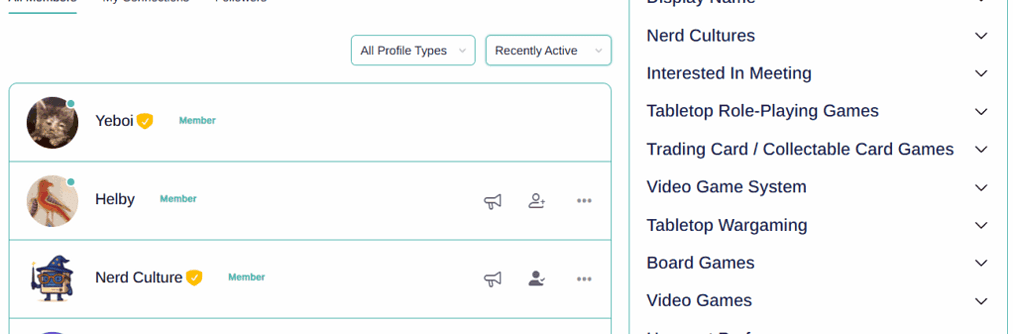
Skip the guesswork when meeting potential new friends. Nerd Culture’s Member Search connects you with others who share your interests, so you always have something to talk about.
FAQs on how to talk to anyone
How do you initiate a conversation over text?
Unlike online conversations, you may not have visible information about the person you could use for an opener. Initiating a conversation over text can involve more generic, open-ended questions to find out more about them.
You could ask them about their life, plans, goals and activities. Or ask for their thoughts on a pop culture event or current affairs.
How do you start a conversation with someone online?
Many people enjoy online conversation and text messaging because they have time to think about what to say and analyze what others share. Online chats are a different form of conversation, so more introverted people often prefer them.
The same principles and steps apply to online conversations as to in-person ones. However, you can focus more on their interests, hobbies and favorite things, as these are likely visible on their online profiles, creating conversation starters that center on them.
Is improving conversation skills good for an introvert?
Improving conversation skills as an introvert can help them learn to express themselves better, build confidence and find more success in social and professional settings. There’s no expectation of becoming a master conversationalist in an instant, but introverts can build meaningful relationships by improving speaking skills a little at a time and leveraging their natural strengths in deeper one-on-one connections. If you’re looking for a more complete answer on what steps to take to build friendships as an introvert, consider checking out our guide on how to make friends as an introvert.
What should I do if I don’t like how the conversation’s going?
Everyone’s different, so not all conversations will be comfortable. Speaking to people with different views, opinions or approaches can be a great experience, even if you’re not feeling positive about the topic.
However, there may be the odd conversation that’s particularly conflicting or unpleasant. Try steering the topic in a different direction by asking more general, open-ended questions. Or, if you must, politely excuse yourself.