



How to Make Time for Your Hobbies
Discover how small changes can help you reclaim your time and reconnect you with the hobbies you love.

Tired of hearing about “work-life balance”? We don’t blame you. Life feels pretty full for millions of students and adults. The lack of balance leaves them wondering how to make time for hobbies when life gets busy.
Hobbies can feel like a “nice to have” for adults…. but this isn’t right. Hobbies are important and are absolutely worth the effort to make time for.
Hobbies are more important than most people think
Hobbies are fun! That’s why we do them, but that’s not the only reason. WebMB reports health benefits of hobbies include improved well-being, stress, mental health, and relationships. Plus, one of the most popular TED Talks, The Happiness Advantage, states that being happier boosts work performance, too. Whether you’re maintaining current hobbies or learning how to find your passion, these benefits are absolutely worth pursuing.
A Hub Built Around Your Schedule
How to make time for hobbies as an adult
It’s possible to make time for hobbies when working full-time with other commitments to juggle. There are ways to free up a few hours, which can make all the difference. Here’s how to make more time for hobbies each week.
1. Make hobbies a part of your routine
Hobbies get dropped fast when they’re treated like a “nice to have.” But this changes when you make them a part of your routine.
Just like booking important work and family commitments, make hobbies an important part of your weekly routine. You become more savvy with time and you’re more likely to make time for hobbies.
2. Use a calendar app
“Free time” rarely shows up. So instead of waiting for rare windows, try creating them. Calendar apps are a game-changer. They are a big productivity booster that can help you see how to make time for hobbies.
Calendar productivity tips:
- Fill it up: Enter work hours, the days you’re going grocery shopping, and every phone call you need to make. You soon see how much time you have. Plus, when you do have a spare few minutes, look ahead and complete tasks ahead of schedule to free up more space for hobbies.
- Time-block: Time-blocking your calendar helps you focus on a specific task or group of tasks. For example, if a graphic designer were time-blocking, they’d use time blocks for emails, concept creation, marketing, and admin tasks. Time-blocking helps you get into a flow state to breeze through tasks without switching gears every other minute.
- Set alerts: Event alerts help you to stay on track without needing to check your calendar multiple times a day.
- Create buffer time: Being super ambitious with your calendar often ends in frustration. “Tasks almost always take longer than expected“ – Hofstadter’s Law. So, leaving a small buffer window or two in your schedule helps you deal with any disruptions.
- Review: Look back at your week to see where your time went. Adjust your time blocks if tasks have a habit of overrunning.
3. Set Specific, Measurable, Achievable, Relevant, Time-bound (SMART) goals
The work “finish line” keeps moving. That’s why it often spills into your personal time. But knowing this is the key to beating it. Again, using a graphic designer as an example, if someone said, “Tomorrow I need to work on six website concepts,” that’s not a clear goal. Plus, finishing six concepts in one day? Not likely!
They’ll keep pushing if they’re having an unproductive day, where they’re likely to overrun. And if they’re having a productive day, perfectionism might take over. Again, they could end up overworking. There’s no time for hobbies when this is a daily habit.
A SMART goal would be ”I need to finish two homepage layout concepts for my client by 6 PM before the review tomorrow. Then, their feedback will help me design more, if needed.” That’s a great SMART goal. Now they have a realistic target to aim for before they finish work. There’s much less chance of overrunning (and that’s great news for your hobbies).
4. Limit common time thieves
Those digital rectangles we carry around sure get in the way of our hobbies. The average American spends around 8 hours per day on digital devices. We know it’s hard to keep screen time low as we use our phones multiple times a day, but here are some tips to help you reduce usage and limit distractions.
How to reduce screen time:
- Customize notifications: The average US smartphone user gets a whopping 46 app push notifications per day! Most of them are from apps you barely use. Configure your settings to limit unnecessary notifications.
- Use grayscale mode: Our phones are addictive because they give dopamine hits – “the pleasure molecule.” Switching your phone to grayscale makes it less stimulating, so you use it less. It still works perfectly but social media apps, games, and other time thieves aren’t as appealing.
- Use time limit apps: Set daily time limits for entertainment apps to avoid losing time to “doomscrolling.”
- Use websites instead of the apps: Popular platforms such as Instagram and YouTube can be accessed via their websites too. This is a simple way to reduce screen time as it cuts down casual app use throughout the day.
Focus apps and binaural beats are popular tools to help you avoid distractions, too.
5. Make your hobbies more accessible
Minor interruptions can stand in the way of hobbies. For example, you might want to play guitar, but it’s in a case in the lounge so you play it less. Or you want to go to the gym, but you’re tired and don’t fancy digging through your washing to find clothes to wear. These are small obstacles, but obstacles all the same.
The best way to make time for hobbies is to remove barriers:
- If you want to play more guitar, leave your guitar on a stand in the room you spend the most time in, ready to play.
- If you want to read more, rearrange a room to make it a cozy place to read a book. And make sure you always have a book in your bag when you leave home.
- If you want to go to the gym more, make a “gym clothes drawer” so you’re never caught out with nothing to wear.
Note: If you have secret hobbies that you don’t share with others as you feel they are “too nerdy,” we hope you’re a member of Nerd Culture. We bet there are thousands of people out there who share your passion.
6. Commit to a hobby
Motivation fluctuates. There’s always a reason to talk yourself out of doing something on the days when you’re not feeling it (especially evening hobbies after work has spun you in circles). This is normal. Consciously committing to a hobby or even learning how to find a hobby can make a big difference.
How to commit to a hobby:
- Invest in it: It’s proven that people are more obliged to do things when they’ve invested time and money. It’s known as “The Sunk Cost Effect.” For example, you’re more likely to attend a yoga class if you pay a monthly subscription, rather than a free class. If you’re thinking to yourself “I don’t have any hobbies,” consider checking out our top hobbies for adults article.
- Set goals: Goals can give you more incentive to stay attentive. Saying you’re going to learn a song on guitar or score a goal in your next soccer game can help keep you on track. Start with realistic small goals and over time, you will find that your commitment will compound and pay off into something that lasts.
- Remember why you do it: It’s easy to talk yourself out of something when you’re not feeling it. If you’re not in the best mood, you don’t think you’ll enjoy it – so what’s the point in going? But – there’s a known effect called “forecasting bias,” which explains how people are bad at predicting the outcome of a future experience. So don’t overthink it, just go.
Top tip: Bringing a friend to a hobby helps build commitment. You keep each other motivated. If it’s a solo hobby, such as creative writing or knitting, ask a friend to be your accountability buddy. And you can be theirs, too.
Hobbies Made Consistent with People Who Get You
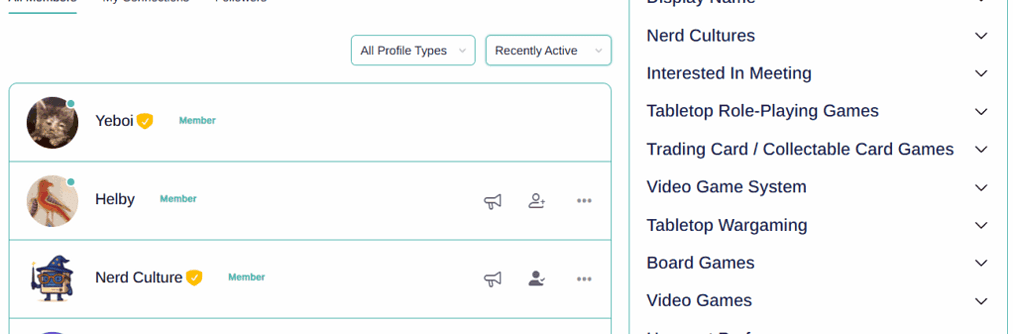
Use Nerd Culture’s Member Search to meet people who understand your hobbies and your schedule, helping you stay dedicated week after week.
7. Be flexible
Some things get in the way of hobbies. The internet can go down, people cancel plans, and events get cancelled. It’s annoying, but there could be steps you can take to stay on track:
- If you can’t play badminton as you need to look after a loved one, can you attend a session later in the week?
- If your internet is playing up and you can’t access your online guitar course, can you practice what you learned last week or try writing a song?
- If your football game was cancelled at short notice, could you contact your teammates to see if they want to practice some drills at the park instead?
Look for ways for your hobbies to keep you busy and engaged, even if the ideal scenario isn’t possible.
Start enjoying your hobbies again
Life gets busy for everyone. Millions of students and adults feel like they have no time for hobbies and social activities. But hobbies make life richer and are well worth making time for. While it can be tricky thinking of ways to make time for hobbies – productivity tips, commitment and accountability can help you make time to enjoy your hobbies again.