



How to Identify and Grow Your Passion
Discover your passion by exploring new interests, reflecting on your values, and finding what truly fulfills you.

Passion, for something so important, can be a hard thing to pin down. Is finding your passion the same as finding a good job? Is a hobby a passion? Is a passion something you never get tired of? The answer to all of these questions is both yes and no, it can change day by day, it may be clear or a total mystery. The entire concept of passion can be frustratingly complex.
Many mentors and friends will tell you that finding your passion in life is the key to happiness and fulfillment, but often the details of how to do just that differ from person to person. Some people stumble into passions as a child, others grow into them as they age, but rarely do two people take the exact same path to finding their passion and welcoming it into their world.
If you’re tired of being asked ‘what is your passion?’ and struggling to come up with a good answer, or just looking for something to give your life a little more meaning, there are ways to improve your odds of finding something to be passionate about. So, without further ado, let’s uncover some practical tips and strategies that you can put to use to find your passion in life.
What is passion in life?
While passion can feel like such a vague term, there is some science to the act of becoming passionate about something. It all revolves around your brain’s reward system, with passion being the term we use to describe the feeling of doing something that aligns with our values.
Essentially, it’s similar to the little spark of joy you feel when completing a project or winning a game, though in this case, the positive feeling is more deeply linked to your sense of self.
Without getting too scientific or mystical, finding your passion basically boils down to finding a topic, project or activity that aligns with your interests and values, so not only will you feel rewarded by engaging with it, you’ll feel fulfilled on a much deeper and more emotional level.
Why is finding my passion so hard?
The frustrating truth is that some people do find it a little more difficult to find their passion, at least that’s what scientists think. Studies suggest genetics play an important role in the act of finding your passion, meaning some people are just naturally better at finding their passions.
People with specific genes associated with increased motivation and pleasure, such as the DRD4 gene, often find it easier to identify their passions. Interestingly, DRD4 is also linked to extraversion, which may explain why introverts find it tough to make friends and connections.
If you’ve ever thought to yourself, ‘I have no passion for anything!’, it could just be that your unique brain chemistry is working against you to some extent. While this can make things a little harder, it certainly does not mean that you’ll never feel passionate about anything ever.
Are passions the same as hobbies?
Not exactly, but they are related. Many people wonder how to find what they’re passionate about and will turn to their hobbies to find an answer. Generally speaking, this is a great idea, in most cases it will at least point you towards the types of things you feel passionate about.
Both passions and hobbies are built around things we enjoy, things we’d happily drop other tasks to engage with. However, there’s a slightly deeper layer to passion that speaks to our core values and sense of purpose, one that you won’t always find in your favorite hobbies.
While the line between passion and hobby can be pretty thin, there are few distinctions you can look out for to help you categorize your interests. On your mission to find your passion, consider whether your hobbies and interests meet any of the following 5 evaluation criteria.
- Commitment: Passions, unlike hobbies, are usually followed with great intensity and commitment. If you can’t stop thinking about a project and feel compelled to engage with it at all times, it may be the case that it’s right there in front of you!
- Purpose: Hobbies offer a fun way to spend free time and meet wider goals related to exercise and socialization, but they don’t necessarily speak to your sense of purpose. You can learn how to identify your passion by thinking about the things you do that align with your values and represent how you’d like to be viewed by the wider world.
- Longevity: Hobbies can be a bit like personal fads, you may fall in love with running, cycling, reading or a specific game for a little while, but find it no longer inspires you down the line. Oftentimes, you’ll know when you’ve found your passion in life when you find a hobby that you never grow tired of and evolves alongside you as you grow.
- Identity: For many people, hobbies are an end to a means, an engaging way to help you achieve a goal such as getting more exercise or becoming more knowledgeable. Passions are much more meaningful, they represent how you’d like the world to view you as a person, they’re central to your identity and form a big part of your character.
- Emotion: You might find that when you ask others about their passion, their eyes may light up as they dive into a compelling conversation of a topic you’ve rarely thought about. Passions are deeply tied to our emotions, they hold the power to not only spark great joy, but intense feelings of fulfillment for simply talking about them with other people.
What are some common passions to have?
Passions come in many different forms. People can feel intense passion for practical things like sports, DIY or creative arts, as well as more nebulous things like social justice, personal growth and the natural world; there’s not really a boundary on where passion is able to grow.
If you’re wondering how to find your passion in life, the broadness of this definition might be a little frustrating. With this in mind, let’s cover some examples of common passions people have to give you a starting point for your search, so, what are some passions to look out for?
- Music: Listening to, writing about and creating new music are all common passions shared by people all over the world. The degree to which you’re involved in the music community doesn’t necessarily reflect your level of passion, if you’re always thinking about and exploring how you feel about music, it’s likely you’ve found your passion.
- Fitness: Sports, weight training, body building and related things like healthy eating are all topics people can feel passionate about. If you find yourself looking forward to your daily exercise or constantly considering ways to optimize your training routines, congratulations, you no longer need to sit and wonder what I am passionate about.
- Video games: Yes, video games are a perfectly reasonable passion, no matter what other people might say. Whether it’s building the perfect character in a specific RPG, or diving into the technical side of game making, there are loads of people out there who share your passion, many of whom you can find hanging out at nerdculture.com!
- Food: Sometimes finding your passion and purpose just takes following your gut, literally! Cooking, meal prep, baking, eating out, food tours and recipe crafting are all very common passions that many people don’t even realize they have. Consider how eating makes you feel and you should have a pretty good idea of where you stand.
- Community: There are loads of things you can be passionate about, some of which are a little harder to define. If you’re always trying to build connections with people, help others find their purpose and influence meaningful change in the world around you, it may just be that community itself is the thing you’re most passionate about.
Your Hub for Shared Passions
Can you find your passion at any age?
Of course! There’s no limit to when you can fall in love with a topic and find your true calling in life, there’s also nothing wrong with choosing to not explore your passion. Your life is a unique journey that you get to navigate, checkpoints and milestones shouldn’t be compared.
However, if you’re reading this article, it’s likely that you are wondering how to find your passion and purpose in life; you may even feel frustrated that you’ve not found it at your age.
Worry not, no matter how young or old you are, you’re on the right track. Below, you’ll find a few passion tips to help you find your calling, no matter what stage of life you’re currently in.
How to find your passion as a child
Many people find their passion at a young age, possibly due to the fact that kids don’t really overthink things, they just engage with topics that they enjoy. For younger readers who may be struggling with finding your passion, below are some helpful tips you should keep in mind.
- Give everything a try: One of the best things about childhood is the freedom you’re given to test things out. Something might seem dull from the outside, but you’ll never really know if that’s true without giving it a try, you don’t have to be great at it, and it’s okay to decide it’s not for you, but trying is the first step towards finding your passion.
- Let yourself feel bored: Sometimes, the answer to a question only becomes clear when you give yourself a bit of space to work it out. By letting yourself feel bored and freeing your mind from distractions, you give yourself a chance to think about what you really want to do; follow that thought and you might just find your new passion!
- Try to avoid expectations: Sucking at something is the first step towards being sort of good at something. We’re not always skilled in our passions, in fact, a good way to know you’re passionate about something is to want to be better at it. Try not to worry about what others may think, just focus on having fun and learning about new things.
How to find your passion as a student
Life itself can feel pretty complicated as you move from childhood to adulthood. For people who have already found their passion as kids, it can provide a welcome comfort in the face of so much change; those who haven’t may feel it’s just an extra thing to feel anxious about.
The good news is that students have loads of opportunities to try new things and meet new people, some of which may lead you to your passion in life. If you’re nearing the end of your childhood, gearing up for college or already a full-time student, consider the below guidance.
- Embrace extracurriculars: College-run clubs, communities and courses are almost tailor-made to help you learn how to discover your passion. Not only do they give you a chance to try a wide range of social activities in a controlled environment, they also put you in front of a whole community who share your interests. Give anything a try at least once, even if you don’t find your passion, you’ll likely make a few new friends.
- Explore online communities: It’s not always easy to find local communities who are into the same things as you, but trust us, they’re usually out there! Social community platforms like Nerd Culture can help you connect with people into all kinds of hobbies, even things others might think are a bit niche. Whether you’re looking to find a D&D group or play some Magic: The Gathering, you’ll find your new community at Nerd Culture.
- Seek practical experiences: For some people, passion and work overlap. Seeking practical experiences whilst at college is a great place to start. Look for volunteer opportunities at local charities, internships in fields you’re interested in or even try out some freelance work for small businesses, you never know, you might find your passion leads to a fulfilling career.
Where Passion Brings People Together
Uncover your next passion with Nerd Culture by joining communities that understand what motivates you, while making every step exciting.

How to find your passion as an adult
To be truthful, learning how to discover your passion as an adult can be a bit challenging, as you’ll likely have far fewer opportunities to really engage with new things. However, nothing is impossible, in fact, finding your passion as an adult can be easy if you know where to look.
- Start small: Yes, you have less time to think about and act upon finding your passion as an adult, but that doesn’t mean you have no time at all. Start small, read about a new topic, listen to a new podcast or watch some tutorials online. These may seem like inconsequential little tasks, but before you know it, you’ll start thinking about a topic more and more and, hey presto, you’ve found yourself a new passion!
- Open your ears: If finding the time to seek out new interests seems impossible, why not let others help you out? Friends, colleagues or even passing acquaintances will likely mention adult hobbies you’ve never considered. Learning how to start a conversation about their interest can open doors. The next time someone mentions a topic you haven’t thought of, ask them to tell you more, you may find yourself invited to a game night that opens the door to a new and exciting passion.
- Embrace change: We all get a little set in our ways as we age – it can provide some much needed comfort in a commonly stressful world! However, staying still is rarely an effective way to find your passion. You don’t need to completely rearrange your life, but embracing a change in routine every once in a while can be a good way to broaden your horizons and put you in situations where new passions could blossom.
Discovering your passion takes some hard work
Oftentimes, people find their passions in unconventional places, through introspection, a bit of soul searching and in facing their biggest anxieties. If you’ve struggled with finding your passion for years, it may help to look inwards.
Face your fears
To truly feel passionate about something is to allow yourself to be totally vulnerable, to open yourself up to intense emotions and boldly share your true feelings. When all goes well, this allows you to feel true joy, but also deep sadness when things don’t go quite as you planned.
Fear and anxiety can hold people back from finding their true passion in life, as often people decide the risk of failure is simply too great to face. If you’re struggling to find your passion, it might take a little bravery to really throw yourself into something no matter the risk of failure.
Look inwards
Passion is a deeply personal emotion, one that’s firmly connected to your unique personality and sense of self. The source of your passion may be completely different to those of your friends and family, meaning you’ll need to truly understand yourself before it becomes clear.
Practicing mindfulness and silent meditation can help you to connect with your sense of self and uncover your true passion in life. Take some time to regularly sit with your thoughts and consider the things that make you happy, not just topics, but actions, moments and energies.
Build confidence
There’s an awful lot of power in the ability to believe. The way we feel about things impacts how we approach them, meaning if you don’t truly believe you’ll find your passion, succeed at a task or open yourself up to fulfillment, it’s unlikely that you’ll get to where you want to be.
The good news is that fake it till you make it works, so as long as you’re willing to embrace a bit of fear at the start, you can put yourself on the right path to building real confidence. After a little time, you’ll learn to find passion projects by confidently embracing all that excites you.
How to find your passion and keep it
Once you’ve learned how to discover your passion, you might think you’re all done, but for a lot of people, embracing their passion can introduce new challenges. We’re not talking about big problems (don’t worry!), it’s just that the depth of emotion you can feel when you’re truly passionate about something can open the door to problems like burnout if you’re not careful.
If you’re looking to not only find your passion, but keep it strong for many years to come, try to keep the below passion tips and best practices in mind and work them into your mindset.
Know when to take a break
As passion is so deeply tied to emotion, sometimes engaging with our passions can become exhausting. If you’re starting to feel a little burnt out, remember, it’s okay to take a break; you might even discover a whole new level of interest for your passion when you come back to it.
Schedule time for your passion
Too much of a good thing is an idiom for a reason. Pouring all of your free time into a single interest can quickly lead to burnout, so try to be a bit mindful of when and for how long you engage with your passion; little and often is the key to forming healthy and rewarding habits. On the other hand, if you are struggling to find the time, check out our article on how to make time for hobbies.
Open up your passion to others
Talking about and sharing your passion in life with others can be a great way to broaden its scope and re-illuminate its appeal. Watching people you care about fall in love with the same thing as you is incredibly rewarding, and can even help you to strengthen your relationships.
Seek new learning opportunities
Immerse yourself in communities linked to your passion and open yourself up to the wisdom of others. Insights from different perspectives can help you view your passion in a new light and fall in love with specific aspects or associated interests that you might have overlooked.
Above all else, be kind to yourself
Remember, finding your passion is a journey, one that will always be marked by both peaks and valleys. It’s okay to walk away for a little while, the spark will reignite in time, so long as you make sure to treat yourself with kindness and not overburden yourself with expectations.
Find Your People, Fuel Your Passion
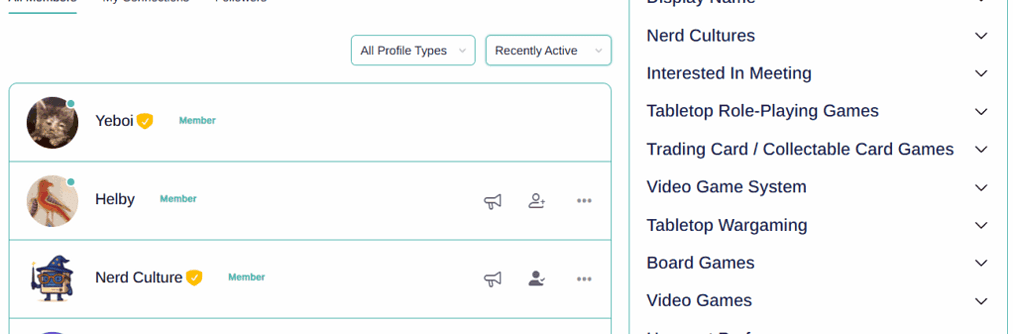
With Nerd Culture, quickly meet people who share your passions and make diving into them even better.
Final thoughts
At some point, most of us have wondered what our passion is and many of us have been weighed down by the perceived size of the challenge. We all want something to feel genuinely excited about, but it’s surprisingly difficult to work out exactly what that means.
Finding your passion can take a bit of hard work, a lot of introspection and, oftentimes, quite a bit of time, but no matter where you are in life, it’s never too late to start. If you’re ready to start diving into a new passion, we’re here to help, join Nerd Culture for free today and start connecting with people who think just like you, your new passion could be just a click away.